Quiz “No one is bigger than bread”
| Keywords | Knowledge Emotion Communication Participation Research Cultural Heritage Intergenerational Intercultural Prize/Award Bread |
| Target Group | Civil Society All Ages Families |
| Type of Action | Public Event |
| Research | Cultural And Religious Festivities Traditions, Welcome Tradition Proverbs, Poems, Literature |
| Location | Regional Library |
| Pedagogical Aims | Communication Information |
| Use of Media | Computer Internet |
| Dissemination | Press Internet |
| Geographical Scope | Local |
| Type of Method | Information-Orientated |
| Knowledge Transfer | Emotional |
| Area of work | Cultural Event |
| Location or Venue | Dondukov-Korasakov Str. № 1, 7000 Ruse |
| Number of Participants | 60 |
Duration
| From | Until |
| 12/11/2019 | 12/11/2019 |
Short Description
Full Description
There are many valuable characteristics of the quizzes as an interactive method of teaching and learning.
• They are educational tools that help with concentration, identify gaps in learners’ knowledge, build confidence and help seniors and children retain information.
• They are fun and a stress-free way to learn.
• They help people to learn and retain information.
• The quizzes present information from a different perspective. Looking at things from a different angle often contributes to a better understanding.
• Playing quizzes makes individuals feel good and enthusiastic to play more. The more often they play, the more they learn.
• The quizzes build confidence.
• They develop learners’ thinking and their ability to quickly recall the information required to answer the quiz questions.
• Quizzes stimulate the individuals to participate in social activities.
Quizzes are more effective when:
• The theme is closer to the participants like the quiz “No one is bigger than bread”.
• The quiz involves competition among a large number of people.
• The quiz participants represent various age groups such as seniors, students, and children, which contributes to intergenerational learning.
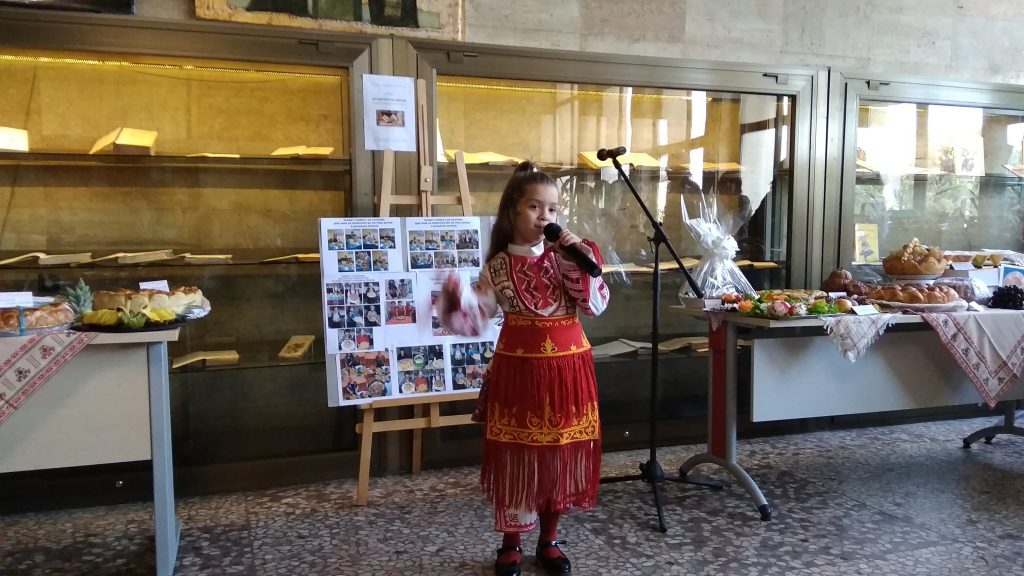
Some of the quiz questions are:
• What do we call the vast Dobrudzha plain? (a plain in the northeast of Bulgaria)
• What stages does bread go through from sowing the wheat to the table?
• What seeds is flour made from?
• What are the main ingredients for making bread?
• How many sieves are used to sift flour for ritual bread?
• Why isn’t ritual bread cut but broken?
• What ornaments do we decorate ritual bread with and what do they symbolize?
• Which holidays do we make ritual breads for?
• What are the ritual breads for Christmas Eve and Christmas?
• Easter ritual breads – what shape do they have and how do they taste?
• What are the patterns and inscriptions decorating the ritual bread for St. George’s Day?
• What are the names of the ceremonial breads for St. George’s Day?
• What is the shape of the ritual bread for Forgiveness Day?
There are innumerable superstitions about bread because people know that “No one is bigger than bread” and “Bread is bigger than the King“.
Some of the quiz superstitions are:
• We should never throw away bread because it is considered a sin and can bring bad luck to the home.
• Do not tear/ drop/ crush bread on the floor /! – Collect the crumbs in handfuls and throw them for the birds to eat – a symbol of the dead.
• Bread is a gift of God – it is not cut with a knife but is broken with your hands. The belief is that bread has a soul.
• No bread should be served on a knife or fork because it is bad luck.
• If you dream of bread, something very good will happen to you.
• Bread is cut from one side only – to keep the riches at home.
• Bread is not cut on both sides – it is bad luck!
• The ends of the bread are the luck of the home and should be eaten by the owners of the house.
• Bread must not be turned upside down. The symbolism behind it is the lack of money or disease.
• Don’t leave bread on the ground or bad events will occur!
• For luck and fortune, sprinkle the first and last bite with salt!
• Do not eat bread in bed – crumbs in bed will bring you nightmares!
• To pass bread between friends, from hand to hand – means that you wish them a long and healthy life !
Step-by-step explanation
Results
Variation of the approach
Partner Organistions
| Name | Homepage | Logo |
| University of Ruse Angel Kanchev, Ruse | http://www.uni-ruse.bg/ |  |
| Regional Library Lyuben Karavelov, Ruse | ||
| High School of Tourism, Ruse |
Responsbile Organistion
| Name | Homepage | Logo |
| Union of Pensioners – Ruse |
Products and Materials
| Web Presence |
https://www.libruse.bg/view?name=%D0%9D%D0%B8%D0%BA%D0%BE%D0%B9%20%D0%BD%D0%B5%20%D0%B5%20%D0%BF%D0%BE-%D0%B3%D0%BE%D0%BB%D1%8F%D0%BC%20%D0%BE%D1%82%20%D1%85%D0%BB%D1%8F%D0%B1%D0%B0&news=863 http://www.pension-bg.org/kulinarna_izl.html |
| Documentation of the Project/Event | |
| Post Cards | |
| Poster | |
| Press Release | |
| Photo Gallery | |
| Video | |
| Blog | |
| Decoration: Flags/Bookmarks | |
| Information about the Danube Countries |